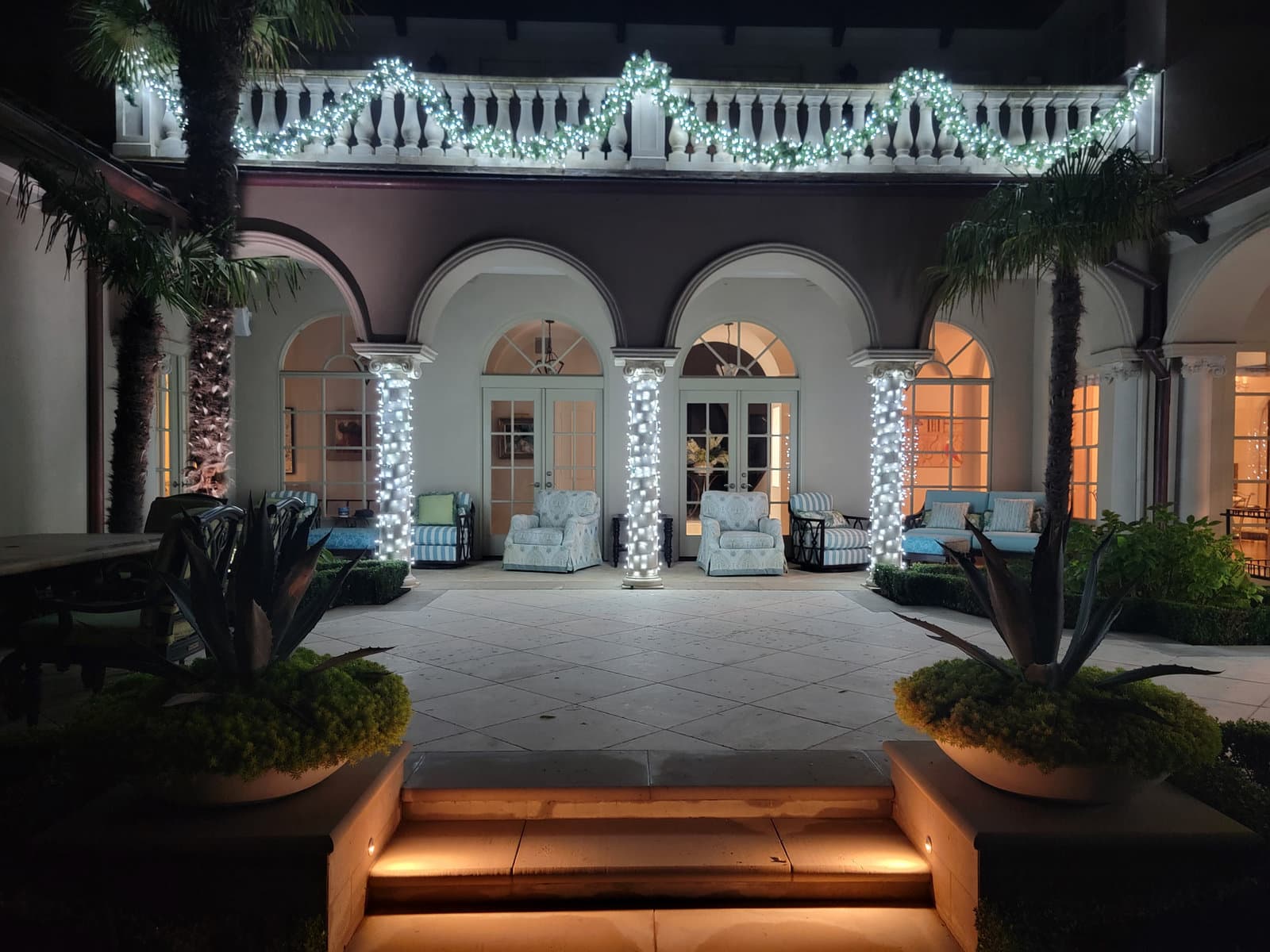
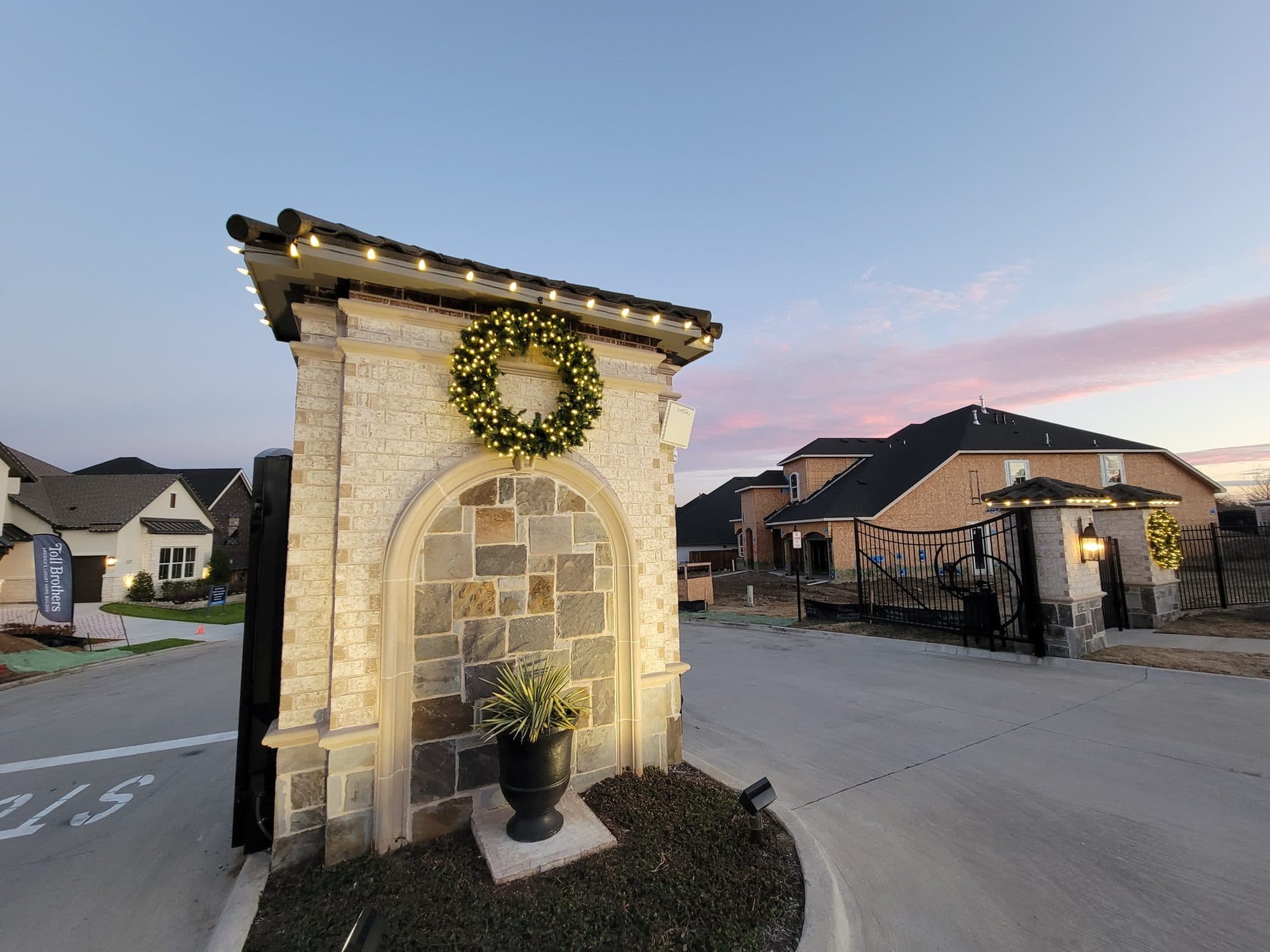
Approve in August or September. Requests across Dallas-Fort Worth peak in the first half of November, installations run from late October through early December, and a board that votes before that peak is choosing its installation date instead of accepting whatever is still open. The calendar, not the design, is what usually costs a community the date it wanted.
Boards run on a slower clock than homeowners do, and that is the whole problem. Here is how the two calendars overlap.
Why does a board need more lead time than a homeowner?
Because a homeowner decides and a board convenes.
A homeowner can read a proposal on a Tuesday evening, approve it on Wednesday and reserve a date on Thursday. A board receives the proposal, circulates it, puts it on an agenda, waits for the meeting, discusses it, votes, and then authorizes someone to sign. If the board meets monthly, every one of those steps is pinned to a date that is not negotiable.
That is why a proposal that lands in early October is often approved in mid-November. By then the metroplex is in the middle of its peak, and the installation window that started in late October is already filling from the earliest bookings forward.
Approving in August or September does not make the season longer. It means the community's date is reserved before the rush rather than after it.
What does the season look like from our side?
Three distinct phases, and only one of them is visible.
Requests arrive heaviest in the first half of November. Installations are scheduled from late October through early December. The two windows overlap badly on purpose: the burst of requests arrives after the installation window has already opened, so each new request is competing for a shrinking set of remaining dates.
Communities are the clients most affected by that, because a community install is not a single afternoon. Entrance monuments, signage, guard houses, tree-lined drives and pre-lit commercial wreaths across more than one entrance add up to real scheduled time, and that time has to be found inside the same window every homeowner is drawing from.
What should the board have before it votes?
Enough to approve the whole season in one sitting.
A board-ready proposal puts the entire season in one document: the design drawn on photographs of your own entrances, itemized element by element, plus installation, in-season maintenance with issues addressed within 48 business hours, and removal beginning January 2. Nothing is left to negotiate after the vote, which is what stops a second meeting from being necessary.
A certificate of insurance is available on request, and most management companies require one on file before a vendor touches common area property, so ask for it as a matter of routine. Insured with $2 million in general liability coverage.
The board should also know who it will be dealing with in December. One point of contact runs the community's season, and the whole team has the community's file, so whoever a director reaches can act on an issue straight away instead of taking a message.
Does the board have to meet us on site?
Usually not, and that saves a month.
We design online from photographs of your entrances plus satellite and street views, so there is no walkthrough to schedule, no gate to arrange and no calendar to coordinate before a proposal can even be written. A property manager can send photos and have a drawing to circulate, without a site visit to arrange first.
For larger community projects an on-site walkthrough is available on request. It is genuinely available — not a formality — but it is an option rather than a step, and skipping it shortens the front of the process.
What is the realistic schedule for a board that is starting now?
Work backwards from the date you want lit.
Decide the week in which the community should be lit — for most, that is the week of Thanksgiving or the first week of December. Reserve the installation date well before the first half of November. Hold the approving vote at the meeting before that. Have the proposal in the board packet for that meeting. And send us photographs of the entrances two to three weeks before the packet closes.
Count those steps back from a late-November install and you land in August or September, which is why that is the answer. A board that starts in August is never rushed. A board that starts in November is choosing from what is left and hoping the vote goes cleanly the first time.
What about a community that is renewing?
Shorter path, same calendar.
If we lit your entrances last season, the design already exists and there is no new bid to prepare. The board confirms it wants the same scheme, or names what should change, and the date is reserved from there. Colors can change at no charge as long as the design itself stays the same, so a community can look different this December without the board reopening the design at all.
Even then, reserve early. A renewing community that waits until November is competing for the same dates as everybody else.
Request an HOA proposal and we will reply within one business day. The HOA and communities page sets out exactly what a board-ready proposal contains.
Common questions
The HOA Holiday Lighting Calendar: common questions
When should an HOA board approve holiday lighting?
August or September, if the board wants a choice of installation dates. Requests across Dallas-Fort Worth peak in the first half of November and installations run from late October through early December, so a community that approves before the peak is choosing a date rather than taking what is left.
How long does board approval usually take?
Longer than a homeowner's decision, which is the whole reason to start early. A board has to receive the proposal, read it, put it on an agenda, meet, and vote. If meetings are monthly, a proposal that arrives in October is realistically approved in November, which is already inside the busiest part of the season.
Do you need to visit the community to prepare a proposal?
Usually not. We design online from photographs of your entrances plus satellite and street views, so there is no appointment to schedule. For larger community and commercial projects an on-site walkthrough is available on request, and a certificate of insurance is available on request as well.
Related