Let the house choose. Warm white suits brick, stone, stucco and painted wood; cool white suits white trim, gray stone and modern black-framed glass; multicolor suits houses built to be cheerful rather than formal; and candy cane, in red with either white, belongs on the vertical details — columns, posts and entry pillars — rather than along a whole roofline.
That is the shortcut. The longer version is worth reading if you are deciding for a property you intend to light for years, because the color is the one decision you can revisit for free.
What colors are actually available?
Five named schemes, plus whatever you ask for.
Warm white. Cool white. Multicolor. Candy cane in red and cool white. Candy cane in red and warm white. Several more colors and custom combinations are available on request, and that request is a normal part of a consultation rather than a special favor — matching an existing monument or a brand color is available on request too.
What matters is that you are choosing a scheme for a whole elevation, not a bulb from a shelf. A color that looks lovely in your hand can go flat across sixty feet of roofline, and a color that looks ordinary close up can be the one that makes the house read from the road.
Which color suits which architecture?
Start with what the house is made of.
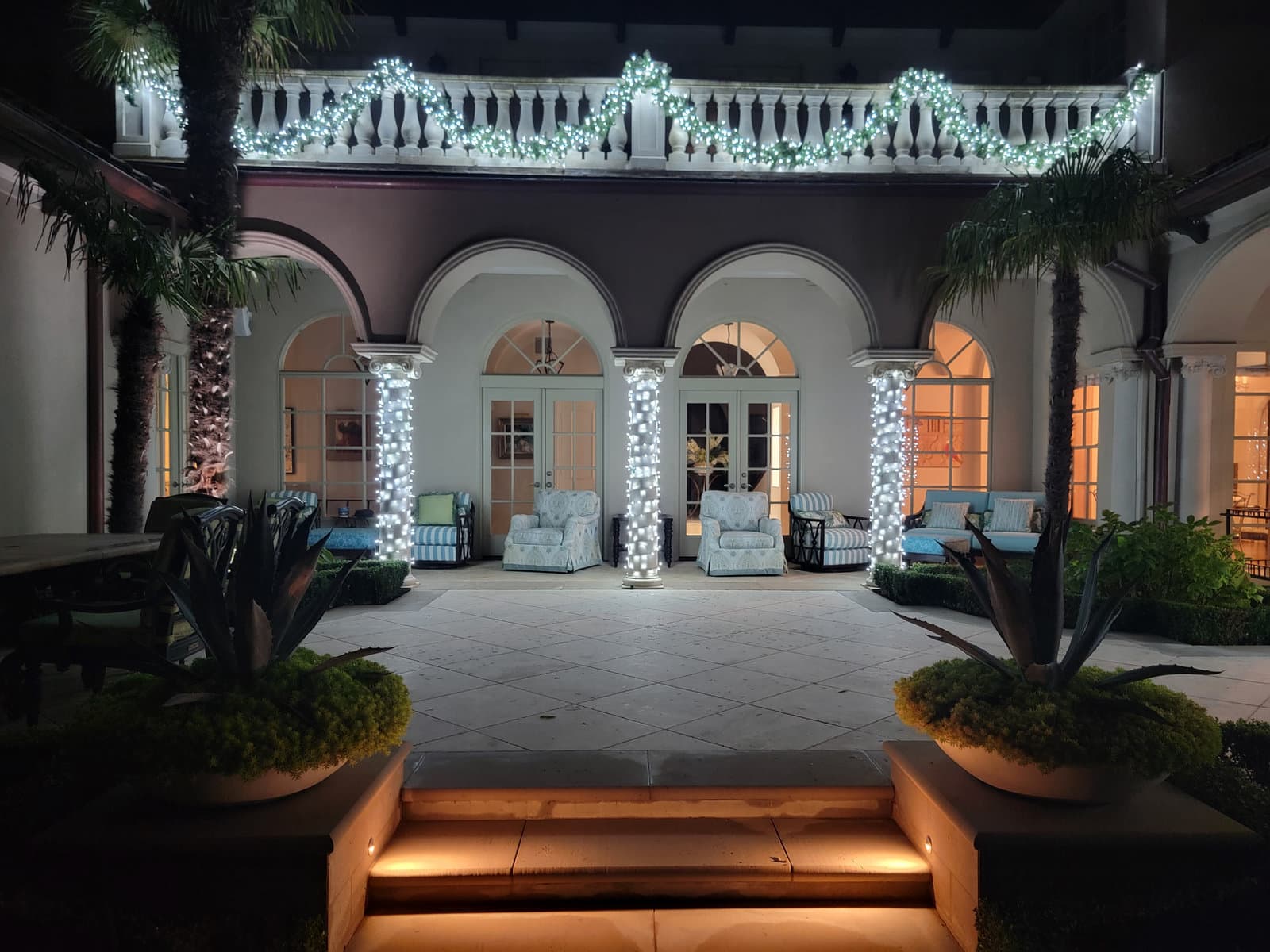
Stone and brick. Warm white, almost always. Limestone, Austin stone and red brick all carry yellow and brown in them, and warm white sits inside that range instead of fighting it. The wall seems lit from within. Cool white over warm stone tends to read blue and slightly cold, like a security light.
White or painted stucco. Either works, and this is where the decision is genuinely yours. Warm white turns white stucco golden and soft. Cool white keeps it white and makes the shadow lines sharper. If the house has black or bronze window frames, cool white usually wins; if it has wood doors and terracotta, warm white does.
Tudor and traditional. Warm white, with the lights following the gables rather than crossing them. Tudor elevations are already busy — half-timbering, leaded glass, steep pitches — and a single consistent color keeps the eye on the shape of the house. Add a lit wreath on the main gable and let the roofline do the rest.
Modern. Cool white. Clean horizontal rooflines, large glazing and dark cladding were designed for contrast, and cool white is the only scheme that holds a hard edge against them.
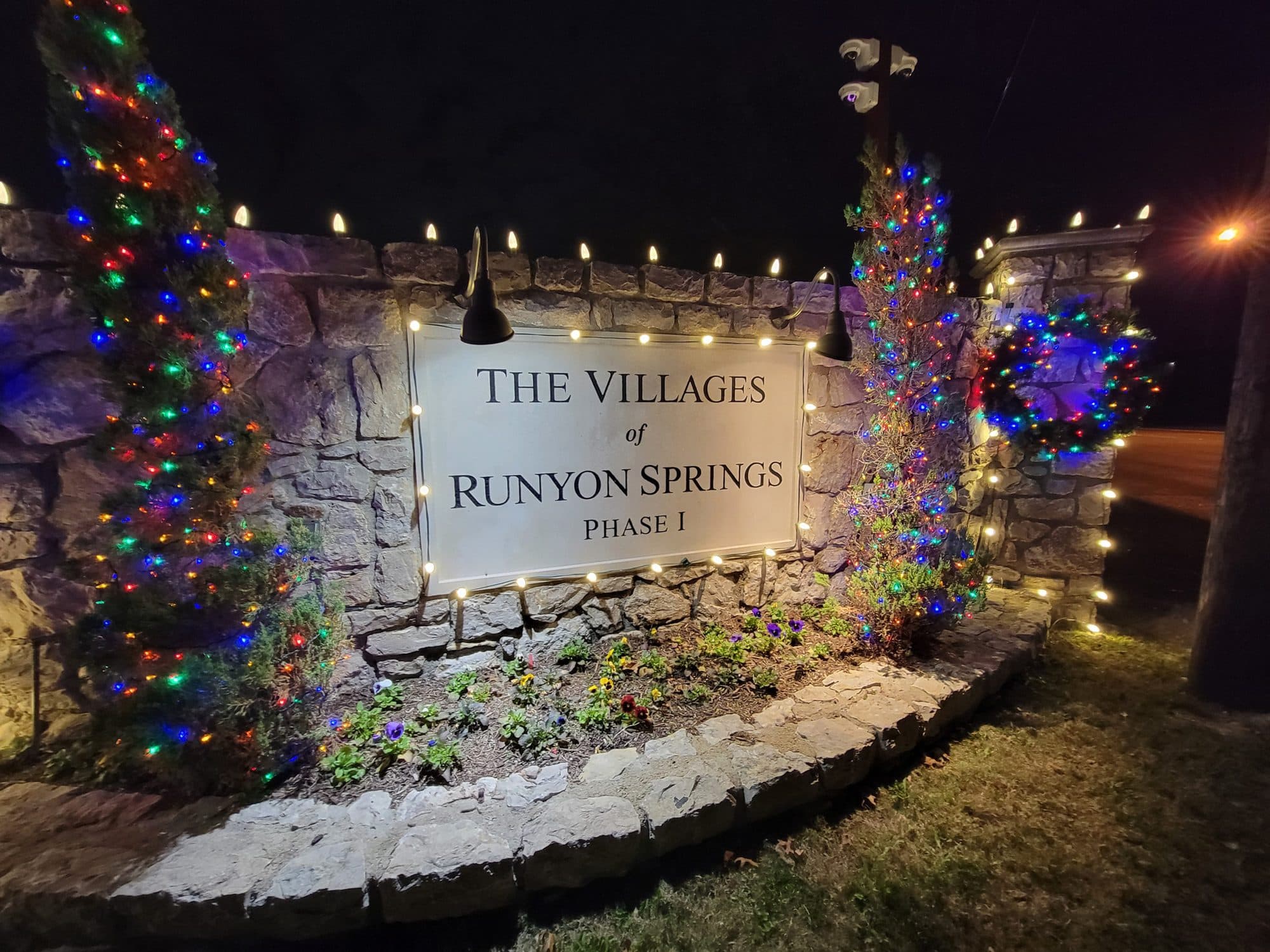
Multicolor. Multicolor is a choice about mood, not architecture. It belongs on houses that are meant to look joyful — family homes where children are the audience, streets where every house is lit, trees rather than rooflines. The most reliable way to use it is in the canopy and trunks while the house itself stays white, so the yard reads festive and the architecture stays composed.
Where does candy cane belong?
On verticals, and on the detail you want people to walk toward.
Candy cane in red and cool white, or red and warm white, is a striped scheme, and stripes need something to wrap. Columns, porch posts, entry pillars and the uprights of a portico all take it beautifully. It gives the front door an obvious destination and it is the one scheme children notice first.
Along an entire roofline, candy cane fights itself — the stripe is too small to read at that distance, and from the street it blurs into pink. The more striking choice is almost always candy cane on the columns with a single white on the roof.
The difference between red and cool white and red and warm white is temperature. Red with cool white is sharper and more graphic. Red with warm white is softer and sits more comfortably next to a warm white roofline, which is usually why people pick it.
How should you decide across a whole street?
Look at what your neighbors do before you commit.
In neighborhoods lit end to end in December — the Park Cities are the clearest example — a consistent warm white across roofline, windows and trees reads better than a mixed scheme, because the street works as one composition and your house is one note in it. In neighborhoods where only a few homes are lit, the opposite is true: contrast is what makes a house visible at all, and multicolor or a candy cane accent will carry further.
Mature trees change the answer too. A grown live oak with a hand-wrapped trunk throws a lot of light back at the elevation. Warm white on the house with warm white in the trunks is one continuous scene; cool white in the trunks under a warm white roof will look like two separate decisions.
What if you change your mind next year?
Then change it. That is the point.
You can change your color scheme every year at no charge, as long as the design itself — what is lit and where — stays the same. The design is the work: the drawing, the measurements, the custom fit of every run. The color is a preference, and preferences move. Tell us the scheme you want when you rebook and we carry the rest across.
So choose the scheme you want this December rather than the one you think you could live with indefinitely. You are not locked into it.
Request a design consultation and we will draw the scheme on a photo of your own house before anything is installed. Returning clients can simply rebook and name the new colors.
Common questions
How to Choose Your Holiday Light Colors: common questions
Which holiday light colors can I choose?
Warm white, cool white, multicolor, candy cane in red and cool white, or candy cane in red and warm white. Several more colors and custom combinations are available on request. The scheme is chosen during your design consultation and drawn into the proposal, so you see it on a photo of your own house before anything is installed.
Should I use warm white or cool white?
Warm white suits brick, stone, stucco and painted wood, because it sits close to the color of the material and makes the elevation glow rather than contrast. Cool white reads crisp and modern and holds its edge against white trim, gray stone and black window frames. The material your house is made of usually decides it.
Can I change the colors next year?
Yes. You can change your color scheme every year at no charge, as long as the design itself — what is lit and where — stays the same. Tell us the new scheme when you rebook and we carry the rest of the design across, so a house we have lit for several seasons has never looked the same twice.
Related
Where to go next.
- Why Professional Holiday Lighting Costs What It Does · Residential
- The HOA Holiday Lighting Proposal Checklist · HOA & Communities
- All posts in the Holiday Lighting Journal