A board-ready proposal names every element it is pricing, shows the design rather than describing it, and makes clear who is responsible from the vote through the January takedown. Most proposals that stall at a board meeting stall because one of those three is missing and a director has to ask a question the document should have answered. Here is the checklist to hold any proposal against, ours included.
Does the proposal name the scope element by element?
It should read as a list of specific things, not a service description.
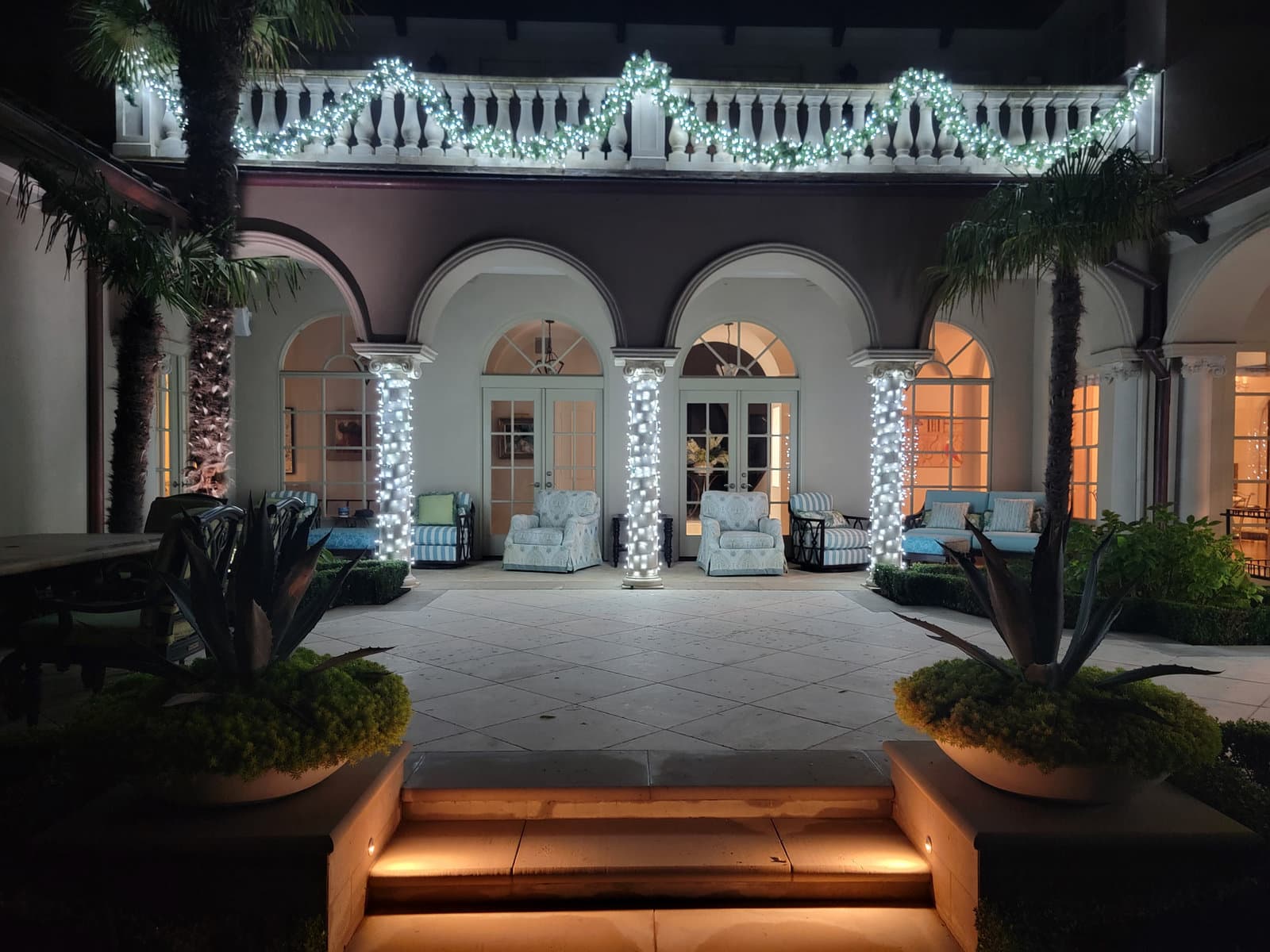
A community's lighting is almost never one surface. The elements that come up again and again are entrance monuments and signage, guard houses, hand-wrapped tree trunks, garland, and pre-lit commercial wreaths. A proposal offering holiday lighting for the community entrance is not something a board can vote on, because nobody at the table knows whether the second entrance is included, whether the guard house is lit, or how many trunks are wrapped.
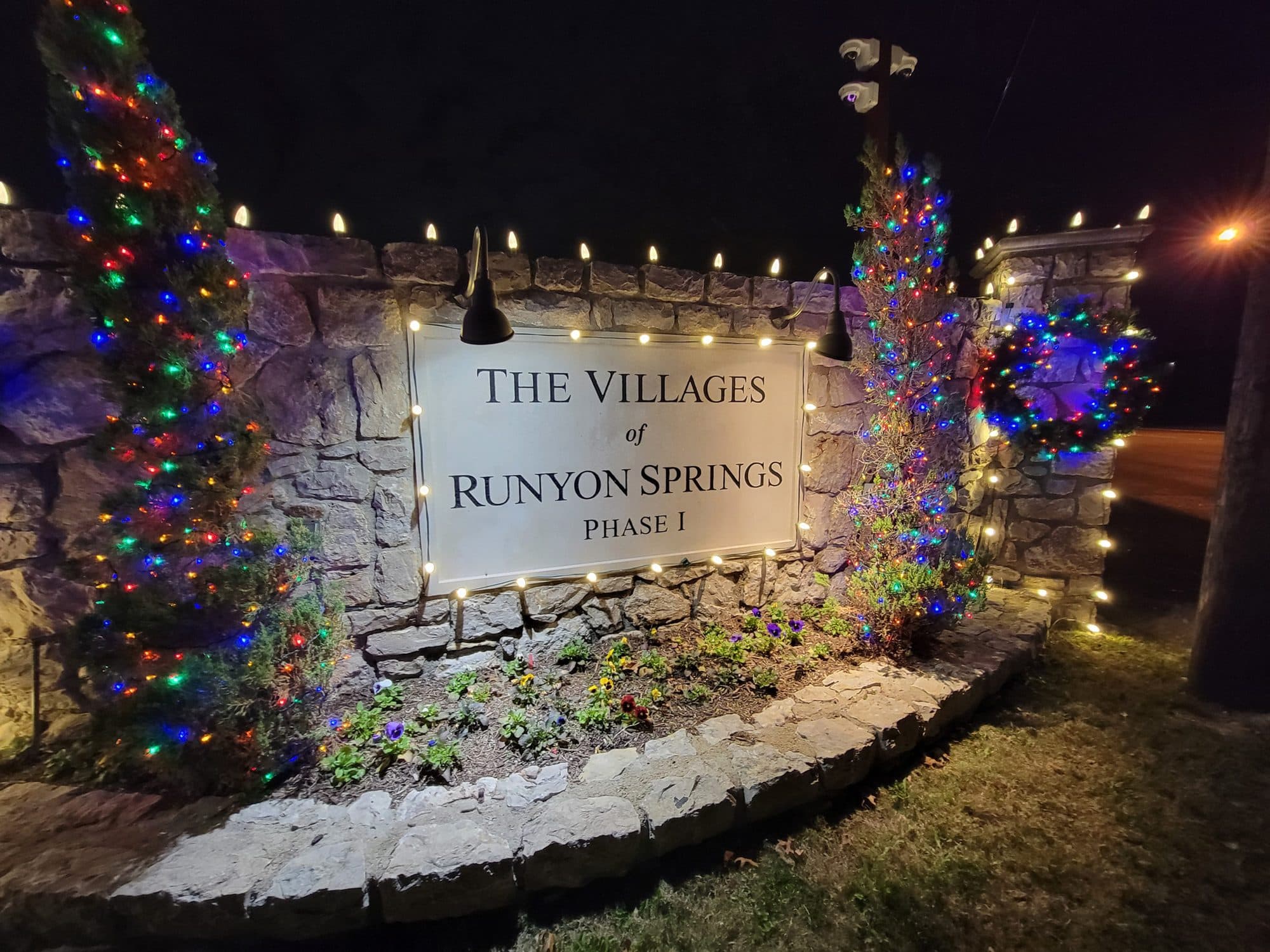
A proposal that says what the Villages of Runyon scheme said — warm white on both entrance monuments, four pre-lit wreaths at two per monument, multicolor mini lights on the trees at both entrances — is a document a board can approve or amend line by line.
Can the board see the design before it votes?
It should be able to. A design described in a paragraph is three different pictures in the heads of five directors.
We draw the scheme on a photograph of the community's own entrance, so what the board approves is an image of the place it already knows. That is also the easiest moment to change anything: swapping the color on the monuments, adding the trunks along the drive, or deciding the guard house stays dark is a conversation, not a change order.
The consultation that produces it is online by default. We work from the community address, photos the board or the manager sends, and satellite and street views. There is no walkthrough to schedule and no meeting anyone has to attend, though an on-site walkthrough is available on request for larger community projects.
Is there one point of contact, or a handoff?
One. This is the question worth asking out loud in the meeting.
Community lighting involves a design conversation in the autumn, an installation date, whatever happens during the season, and a removal in January. A proposal that hands the board from a salesperson to a scheduler to a crew lead to a service line has four places for a detail to fall through, and the board finds out about all four in December.
Ours is one point of contact from the proposal through the January removal. Behind that contact, the whole team has the community's file — the design, the scope and the history — so whoever the board reaches can get an issue handled right away instead of taking a message for somebody else.
What does the proposal say about insurance?
It should say something specific, and it should be able to prove it.
Insured with $2 million in general liability coverage. A certificate of insurance is available on request, and a board should ask for one as a matter of routine rather than as a sign of doubt — most management companies require it on file before a vendor works on common area property anyway.
Ask early. A COI that arrives the week of installation is a COI that has not been reviewed.
What happens between installation and January?
The season needs an answer, not just the install day.
Things fail. A timer loses its schedule, a run goes dark after a wind event, a wreath comes loose. What matters to a board is how long it stays that way, because the community sees it every evening. Our answer is that issues are addressed within 48 business hours, and it is part of the service rather than a separate call-out.
Removal begins January 2. Having a date in the proposal is worth more than it sounds: it is the difference between lights that come down in the first week of the year and lights that are still on a monument in February while a manager chases a vendor.
Who owns the lights?
We do, and a board should know which model it is buying into.
The lights are our own commercial-grade LEDs, leased for the season. The community does not buy them, does not store them, and does not inherit the problem of where a few thousand feet of light lives from January to October. We do not install lights a community already owns, because working from one inventory is what lets us match a replacement exactly and service it quickly.
What should the board send to get a proposal?
The community address, a handful of photos of the entrances and any other area under consideration, and a note on what has been lit in previous seasons. If there are two entrances, say so — it is the single most common thing a first proposal misses.
Communities in Irving and Las Colinas can also see what we have done in the area on the Irving and Las Colinas page.
Once the board has approved the design, the date is reserved the same way every other project is. A 50% deposit reserves your installation date.
Request a board-ready proposal and we will reply within one business day, or read more about how we work with HOAs and communities.
Common questions
The HOA Holiday Lighting Proposal Checklist: common questions
What should an HOA holiday lighting proposal include?
Named scope element by element, one design the board can see rather than describe, a single point of contact from proposal through January removal, and proof of insurance. A certificate of insurance is available on request.
Does the board need to meet on site to get a proposal?
No. The design consultation is online by default, built from the community address, photos the board sends and satellite and street views. An on-site walkthrough is available on request for larger community projects.
Who does the board call during the season?
One point of contact, the same one from the proposal through the January removal. The whole team has the community's file as well, so whoever the board reaches can act on an issue straight away. Issues are addressed within 48 business hours, and removal begins January 2.
Related